
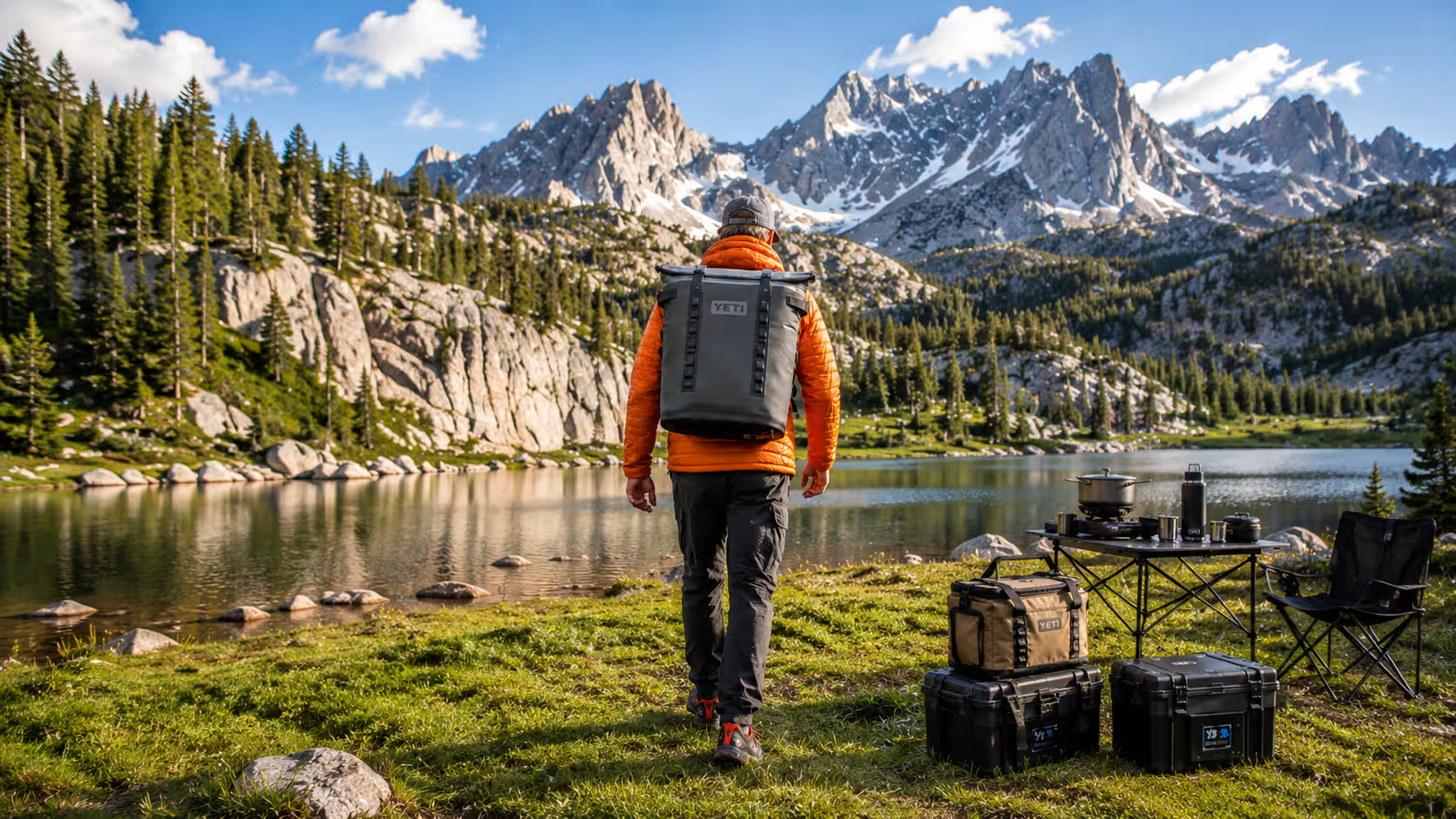
Find the best coolers for camping, beach trips, tailgating, fishing, and backyard parties. Compare the top hard, wheeled, and soft coolers.
Disclosure: This article contains affiliate links. We may earn a commission when you purchase through our links, at no additional cost to you.
A dependable cooler can make the difference between crisp, ice-cold drinks and a trunk full of warm cans and soggy sandwiches.
Whether you are packing for a weekend camping trip, hosting a backyard barbecue, heading to a tailgate, or spending a full day at the beach, the best cooler should keep its contents cold, withstand regular outdoor use, and remain manageable when fully loaded.
To identify the best coolers of 2026, we compared published testing and recommendations from OutdoorGearLab, CleverHiker, and AmazingRibs. These sources evaluated factors such as insulation, durability, usable capacity, portability, drainage, leakage, and everyday convenience. OutdoorGearLab tested 23 current coolers, CleverHiker evaluated models in real outdoor environments, and AmazingRibs used controlled temperature, drainage, leakage, and durability tests.
Best Coolers of 2026: 8 Top Picks for Camping, Beach Days, Tailgating, and Road Trips
| Cooler | Best For | Type | Approximate Capacity |
|---|---|---|---|
| YETI Roadie 48 | Best overall | Wheeled hard cooler | 48 qt. |
| RTIC Ultra-Light 52 | Best value premium cooler | Hard cooler | 52 qt. |
| Coleman Classic Series 70 | Best budget cooler | Hard cooler | 70 qt. |
| YETI Tundra 65 | Best for extended trips | Rotomolded hard cooler | 65-qt. class |
| Xspec Pro 60 | Best rugged value | Rotomolded hard cooler | 60-qt. class |
| Coleman Xtreme 50 | Best affordable wheeled cooler | Wheeled hard cooler | 50 qt. |
| RTIC Ultra-Tough Soft Cooler Pro | Best soft cooler for most people | Soft cooler | 30-can class |
| YETI Hopper Flip 12 | Best premium personal cooler | Soft cooler | 12-can class |
1. YETI Roadie 48 — Best Cooler Overall
The YETI Roadie 48 is our best overall cooler because it combines premium cold retention with excellent mobility. It is especially well suited to family camping trips, tailgates, sporting events, and beach days where you need substantial capacity without carrying a heavy cooler by hand.
Its retractable Periscope Handle and puncture-resistant NeverFlat wheels make it considerably easier to move across parking lots, campsites, packed dirt, and other relatively firm surfaces. The tall interior also accommodates upright bottles more easily than many traditional low-profile coolers.
Both OutdoorGearLab and CleverHiker selected the Roadie 48 as their leading overall wheeled cooler. CleverHiker highlighted its cold retention, interior space, durable wheels, and ability to handle multi-day outdoor trips. Amazon lists a 48-quart capacity, retractable handle, solid wheels, non-slip feet, and integrated carrying handles.
Pros
- Excellent cold retention
- Strong, puncture-resistant wheels
- Retractable towing handle
- Tall interior fits upright bottles
- Premium construction
- Easy to move when fully loaded
Cons
- Expensive
- Bulky for small vehicles
- Wheels work better on firm ground than deep, loose sand
Best for
Families, tailgaters, car campers, sports teams, and anyone who wants a premium wheeled cooler.
Check the YETI Roadie 48 price on Amazon
2. RTIC Ultra-Light 52 — Best Value Premium Cooler
Premium hard coolers are known for their insulation, but they can become extremely heavy before you even add ice, food, or drinks. The RTIC Ultra-Light 52 offers a practical middle ground by delivering strong cooling performance in a lighter design.
Its 52-quart capacity is large enough for weekend camping, fishing trips, backyard parties, and family road trips. The cooler is also easier to lift than many similarly sized rotomolded models, making it a smart option for buyers who want premium performance without premium weight.
OutdoorGearLab named the RTIC Ultra-Light 52 its best option for insulation at the price, while CleverHiker selected it as a leading lightweight, high-volume cooler. The Amazon listing describes it as approximately 30% lighter than comparable rotomolded coolers.
Pros
- Strong insulation for the price
- Lighter than many heavy-duty coolers
- Useful 52-quart capacity
- Easier to load into a vehicle
- Good balance between performance and cost
Cons
- No wheels
- Still heavy when packed with ice
- Not as rugged as the heaviest rotomolded designs
Best for
Weekend campers, anglers, families, and buyers seeking premium performance without YETI-level pricing.
Check the RTIC Ultra-Light 52 price on Amazon
3. Coleman Classic Series 70-Quart — Best Budget Cooler
Not every trip requires a rugged cooler that costs several hundred dollars. For backyard cookouts, family gatherings, youth sports, short camping trips, and casual beach days, the Coleman Classic Series 70-Quart provides a large amount of storage at a much more accessible price.
The spacious interior makes it useful for groups, while the relatively simple construction keeps both the price and empty weight down. It is not designed to compete with premium rotomolded coolers in extreme environments, but it provides plenty of practical cooling capacity for everyday American outdoor activities.
CleverHiker selected the Coleman Classic Series 70-Quart as its best budget-oriented pick and noted its large group-friendly capacity. Amazon markets the Classic Series in several sizes and states that selected models can retain ice for up to five days under specified conditions.
Pros
- Very affordable
- Large interior capacity
- Good for parties and group events
- Lighter than many premium coolers
- Simple, familiar design
Cons
- No gasket or heavy-duty lid latches
- Less rugged than premium models
- Shorter cold retention in demanding conditions
- Can become awkward when fully loaded
Best for
Backyard barbecues, birthday parties, youth sports, family picnics, and budget-conscious shoppers.
Check the Coleman Classic Series 70-Quart price on Amazon
4. YETI Tundra 65 — Best Cooler for Extended Trips
The YETI Tundra 65 is built for people who prioritize durability and cold retention over lightweight portability. Its thick insulation, freezer-style gasket, heavy-duty latches, and rotomolded construction make it appropriate for extended camping trips, hunting camps, fishing excursions, and remote outdoor use.
The Tundra 65 is not the easiest cooler to move alone. Its thick walls reduce some usable interior space, and it becomes very heavy after being filled. However, for users who need a cooler that can remain at camp for several days, its ruggedness is a major advantage.
CleverHiker rated the Tundra 65 as its best large cooler for longer trips, citing its durable construction and extended cold retention. It also reported that the cooler can meet bear-resistant requirements when properly secured with an appropriate lock.
Pros
- Excellent cold retention
- Extremely durable construction
- Heavy-duty lid, gasket, and latches
- Wide range of available accessories
- Suitable for demanding outdoor conditions
Cons
- Expensive
- Heavy and awkward to carry alone
- Thick insulation reduces usable interior volume
- No built-in wheels
Best for
Multi-day camping, hunting, fishing, overlanding, and remote outdoor trips.
Check the YETI Tundra 65 price on Amazon
5. Xspec Pro 60 — Best Rugged Cooler for the Money
The Xspec Pro 60 is a strong alternative for shoppers who want rotomolded construction but do not want to pay the highest premium-brand prices.
Its one-piece body, thick insulation, freezer-style gasket, reinforced handles, and built-in features make it feel more like an expedition cooler than a basic ice chest. It also includes practical details such as a bottle opener, tie-down points, and a textured lid.
CleverHiker selected the Xspec Pro 60 as its most durable cooler and reported excellent insulation performance during its testing. The primary trade-off is weight: this cooler is difficult to carry alone when fully loaded.
Pros
- Durable rotomolded body
- Strong cold retention
- Competitive price for its construction
- Large interior
- Useful built-in accessories
Cons
- Heavy
- No wheels
- Limited size and color selection
- Less established brand ecosystem
Best for
Campers, anglers, hunters, overlanders, and buyers seeking maximum durability per dollar.
Check the Xspec Pro 60 price on Amazon
6. Coleman Xtreme 50-Quart — Best Affordable Wheeled Cooler
The Coleman Xtreme 50-Quart is a practical choice when portability and price matter more than expedition-level durability.
Its built-in wheels and telescoping handle make it easier to move through campgrounds, parking areas, sidewalks, and sports fields. The 50-quart capacity is appropriate for small families, weekend trips, and gatherings without becoming as bulky as many larger wheeled models.
OutdoorGearLab recognized the Coleman Xtreme 50 for portability and value, while CleverHiker selected it for its balance of price and portability. Amazon describes it as a wheeled cooler with added wall insulation and cooling performance rated for up to five days under specified conditions.
Pros
- Affordable
- Built-in wheels
- Telescoping handle
- Useful 50-quart capacity
- Easy to find and replace
Cons
- Basic lid without premium sealing hardware
- Wheels are not designed for rough trails
- Less durable than rotomolded models
- Handle may flex under a very heavy load
Best for
Family picnics, sporting events, festivals, tailgates, and short camping trips.
Check the Coleman Xtreme 50-Quart price on Amazon
7. RTIC Ultra-Tough Soft Cooler Pro — Best Soft Cooler for Most People
Hard coolers offer maximum capacity and insulation, but they are not always convenient for short outings. The RTIC Ultra-Tough Soft Cooler Pro is a better fit for beach trips, boating, picnics, lunch at the jobsite, and day trips where carrying comfort matters.
The soft-sided body is easier to fit inside a crowded vehicle, while the shoulder strap and reinforced handles provide multiple carrying options. Its waterproof exterior and leak-resistant zipper also make it more suitable for wet environments than an ordinary insulated lunch bag.
CleverHiker selected the RTIC Ultra-Tough Soft Cooler Pro as its standout soft cooler. Amazon lists the 30-can version with a waterproof zipper and portable, leak-resistant design.
Pros
- Easier to carry than a hard cooler
- Waterproof outer materials
- Multiple carrying options
- Good capacity for a day trip
- Fits easily in a car or boat
Cons
- Zipper requires more effort than a standard lid
- Less rigid protection for fragile contents
- Shorter cold retention than premium hard coolers
- Can become uncomfortable when overloaded
Best for
Beach days, boating, picnics, work lunches, short hikes, and day trips.
Check the RTIC Ultra-Tough Soft Cooler Pro price on Amazon
8. YETI Hopper Flip 12 — Best Premium Personal Cooler
The YETI Hopper Flip 12 is a compact soft cooler for buyers who want premium materials in a personal-size package.
It is designed for a full day of drinks and snacks rather than feeding a large group. Its box-shaped opening provides easier access than many narrow soft coolers, while the padded shoulder strap makes it comfortable to carry from the truck to the boat, beach, park, or jobsite.
CleverHiker identified the Hopper Flip 12 as its most durable soft cooler. Amazon describes it as holding approximately 12 cans with ice and lists a waterproof, puncture-resistant shell, closed-cell foam insulation, and a leakproof zipper.
Pros
- Premium materials
- Compact and portable
- Waterproof, abrasion-resistant shell
- Leakproof zipper
- Excellent personal-size design
Cons
- Expensive for its capacity
- Limited room for group use
- Zipper may require two hands
- No backpack straps
Best for
Personal day trips, kayaking, fishing, jobsite lunches, boating, and premium gift purchases.
Check the YETI Hopper Flip 12 price on Amazon
How to Choose the Best Cooler
Hard Cooler vs. Soft Cooler
A hard cooler is generally the better option when you need:
- Longer cold retention
- Greater durability
- More interior capacity
- Better protection for food and drinks
- A cooler that may remain at camp for several days
A soft cooler is generally better when you need:
- Easier carrying
- Lower empty weight
- Compact storage
- A cooler for one-day outings
- Something that fits easily in a vehicle or boat
For many households, the most practical setup is one medium or large hard cooler for road trips and group events, plus one smaller soft cooler for daily use.
Choose the Right Capacity
Cooler capacity is commonly measured in quarts, but advertised capacity does not always equal usable interior space. Thick insulation, rounded corners, baskets, and sloped walls can reduce the space available for food and drinks.
A general starting point is:
- Under 30 quarts: One or two people, lunches, or short day trips
- 30 to 40 quarts: Couples, small families, or overnight trips
- 40 to 60 quarts: Family weekends and medium-size groups
- 65 quarts or more: Large groups, parties, or extended trips
CleverHiker similarly recommends approximately 30 quarts or less for one to four people, 40 to 60 quarts for four to eight people, and at least 65 quarts for larger groups.
Consider the Loaded Weight
A large cooler may seem manageable when it is empty, but ice, food, and drinks add weight quickly. A 50- or 60-quart cooler may require two people to lift once packed.
Choose a wheeled model when:
- You frequently attend tailgates or sporting events
- You have mobility or back concerns
- You regularly transport the cooler alone
- Most travel surfaces are paved or relatively firm
Choose a non-wheeled model when:
- Maximum durability is your priority
- The cooler will stay in one location
- You transport it in a boat or truck bed
- You frequently travel over rocky or irregular terrain
Look Beyond Advertised Ice Retention
Manufacturers frequently advertise multi-day ice retention, but actual results depend on several variables:
- Outside temperature
- Direct sunlight
- Starting temperature of the cooler
- Amount and type of ice
- Ice-to-content ratio
- Frequency of opening
- Whether food and drinks were pre-chilled
- Amount of empty air inside the cooler
Published cooler tests also use different procedures, so an advertised number should not be treated as a guaranteed real-world result.
Check the Drainage System
A good drain plug should release melted ice quickly without requiring you to tip over a fully loaded cooler.
Look for:
- A drain that is easy to access
- Secure threading or attachment
- A tethered plug that is difficult to lose
- A channel that allows most water to escape
- Compatibility with a hose when needed
Evaluate Handles and Wheels
Before buying, consider how the cooler will move from your house to the vehicle and from the vehicle to your final destination.
Useful mobility features include:
- Molded side handles
- Flexible rope handles
- Padded grips
- Telescoping towing handles
- Puncture-resistant wheels
- Non-slip feet
- Tie-down points
Wheels add convenience, but they also add weight and mechanical components. For rough backcountry use, a simpler non-wheeled cooler may be more reliable.
See more: 10 Best Electric Scooters Consumer Guide
How to Make Ice Last Longer
Even the best cooler will perform poorly when packed incorrectly.
Pre-Chill the Cooler
Place a sacrificial bag of ice or frozen water bottles inside several hours before packing. Remove this ice before loading the cooler.
A warm cooler immediately begins transferring heat into your fresh ice. Pre-chilling reduces that initial temperature loss.
Chill Food and Drinks First
Do not use the cooler to cool warm soda, bottled water, or room-temperature food. Refrigerate everything before packing.
Use More Ice
A fuller cooler usually stays cold longer than a half-empty one. Fill unused space with ice, frozen water bottles, or cold packs.
USDA guidance similarly recommends packing coolers tightly because a full cooler maintains cold temperatures longer than a partially filled one.
Keep Drinks Separate
A beverage cooler is opened much more frequently than a food cooler. Separating them prevents warm air from entering the food cooler every time someone wants a drink.
Keep the Cooler in the Shade
Avoid leaving your cooler in direct sunlight or inside a hot vehicle. At the beach, keep it under an umbrella or canopy.
Open It Less Often
Know where items are located before opening the lid. Take out everything you need at once and close the cooler promptly.
Use a Thermometer for Perishable Food
The USDA recommends keeping perishable cold food at 40°F or below. An appliance thermometer inside the cooler provides a more reliable safety check than simply looking for remaining ice.
Frequently Asked Questions
What is the best cooler overall?
The YETI Roadie 48 is the best overall option for buyers who want premium cold retention, durable wheels, generous capacity, and convenient transportation.
The RTIC Ultra-Light 52 is a better value for buyers who do not require built-in wheels.
Are expensive coolers worth it?
An expensive cooler can be worth the cost when you frequently camp, fish, hunt, boat, or travel for several days.
Premium coolers generally provide stronger insulation, tighter seals, more durable hinges, better latches, and heavier construction. Occasional users may receive better value from a Coleman or similar conventional cooler.
What cooler size is best for a family of four?
A cooler between approximately 40 and 55 quarts is usually a practical size for a family of four taking a weekend trip.
Choose a larger model when you need to store both food and drinks, or use separate food and beverage coolers.
Are wheeled coolers better?
Wheeled coolers are better for parking lots, campsites, sidewalks, festivals, sports fields, and tailgates. They are less useful on stairs, rocky trails, or deep loose sand.
Which cooler is best for the beach?
The YETI Roadie 48 is excellent when premium performance and wheels are priorities. The Coleman Xtreme 50 is the better budget wheeled option.
For lighter loads, the RTIC Ultra-Tough Soft Cooler Pro is easier to carry.
Which cooler is best for camping?
For most weekend campers, the RTIC Ultra-Light 52 offers a strong combination of capacity, insulation, manageable weight, and price.
For longer trips or demanding environments, consider the YETI Tundra 65 or Xspec Pro 60.
How long should a cooler keep ice?
Real-world ice retention varies significantly. A basic cooler may be sufficient for a day or weekend, while heavily insulated premium models can remain cold for substantially longer when properly packed and kept closed.
Rather than relying only on remaining ice, use a thermometer when storing perishable food.
Final Verdict
The YETI Roadie 48 is the best cooler overall for shoppers who value cold retention, premium build quality, and easy transportation.
The RTIC Ultra-Light 52 is our leading value choice because it offers strong insulation and useful capacity without the weight or cost of many premium rotomolded coolers.
For buyers on a tighter budget, the Coleman Classic Series 70-Quart provides excellent group capacity, while the Coleman Xtreme 50-Quart adds convenient wheels.
Choose the YETI Tundra 65 or Xspec Pro 60 for rugged multi-day use. For short outings, the RTIC Ultra-Tough Soft Cooler Pro offers the best balance of portability, capacity, and durability.
The right cooler is not necessarily the most expensive one. It is the model that fits your group size, trip length, transportation method, and expectations for cold retention.

The BestConsumerGuides team is dedicated to delivering unbiased, research-driven product reviews. We analyze features, benefits, pricing, and real-world performance to help consumers make informed purchasing decisions. Our mission is to simplify complex choices and provide clear, trustworthy guidance across health, wellness, and lifestyle products.