
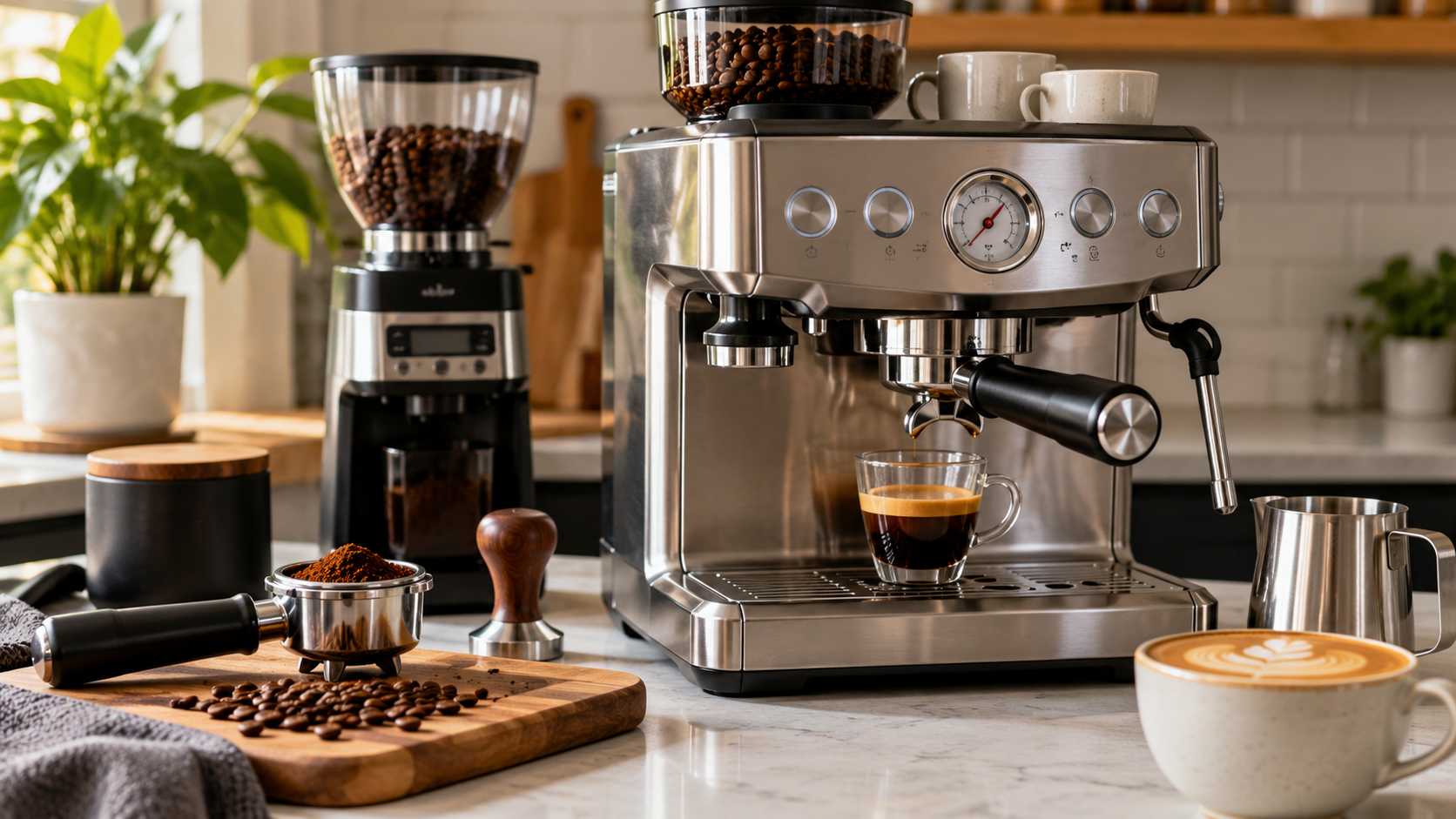
Learning how to choose an espresso machine can feel complicated, especially with so many machine types, grinders, milk systems, and features to compare.
Choosing an espresso machine can feel complicated. There are manual, semi-automatic, automatic, and super-automatic machines, along with different grinders, milk systems, boiler designs, and features to consider.
The right choice is not necessarily the most expensive machine. It is the one that fits how you make coffee, how much control you want, how much counter space you have, and how much time you are willing to spend learning and cleaning.
This guide explains the key factors to consider before buying an espresso machine so you can narrow down your options with confidence.
1. Start With the Type of Espresso Machine
The first decision is how much of the espresso-making process you want to control yourself.
If you’re also deciding between espresso and traditional brewed coffee, see our espresso machine vs coffee maker comparison for the key differences.
Manual Espresso Machines
Manual machines give you significant control over the brewing process. Depending on the design, you may control the pressure and extraction yourself.
They can appeal to enthusiasts who enjoy experimenting with espresso, but they generally require more practice and consistency from the user.
Best for: experienced users and enthusiasts who enjoy a hands-on brewing process.
Semi-Automatic Espresso Machines
Semi-automatic machines balance control and convenience. You typically grind and dose the coffee, prepare the portafilter, start the extraction, and steam milk yourself.
This makes them a popular choice for people who want to learn espresso-making without moving completely into manual brewing.
Best for: home users who want control while retaining some convenience.
Automatic Espresso Machines
Automatic machines automate part of the brewing process, particularly the amount of water used for each shot.
You still perform several preparation steps, but consistent programmed shot volumes can make everyday operation easier.
Best for: users who want more consistency with less manual intervention.
Super-Automatic Espresso Machines
Super-automatic machines handle most of the process for you. Many can grind beans, dose coffee, brew espresso, and prepare milk drinks at the touch of a button.
The trade-off is usually less direct control over individual brewing variables.
Best for: convenience-focused households and users who want quick espresso-based drinks.
2. Set a Realistic Budget
Your budget should include more than the espresso machine itself.
If the machine does not include a grinder, a suitable coffee grinder may represent a significant additional expense. You may also need accessories such as a tamper, scale, milk pitcher, cleaning supplies, and water-treatment products.
Instead of buying the most feature-rich machine within your maximum budget, think about the complete setup.
For example, pairing a capable semi-automatic machine with a good grinder can make more sense for some users than spending nearly the entire budget on the espresso machine alone.
If you are already comparing specific models, see our Best Espresso Machines guide for a broader look at available options.
3. Decide Whether You Need a Built-In Grinder
Fresh and consistent grinding plays an important role in espresso preparation.
Some espresso machines include an integrated grinder. This can save counter space and simplify the workflow because grinding and brewing happen in one unit.
Separate grinders, however, give you more flexibility. You can upgrade the grinder independently, choose from a wider range of burr designs, and potentially make more precise adjustments.
A built-in grinder may be appropriate if you value:
- Convenience
- Fewer appliances
- A simpler workflow
- Reduced counter clutter
A separate grinder may make more sense if you value:
- Greater adjustment flexibility
- Easier future upgrades
- More control over grind settings
- The ability to replace the grinder independently
Neither approach is automatically better. Choose based on your priorities and available space.
4. Consider the Milk Frothing System
If you mostly drink straight espresso or Americanos, milk steaming may not be a major consideration.
If you regularly make cappuccinos, lattes, or flat whites, the milk system becomes much more important.
Traditional steam wands offer greater manual control but require practice. Assisted steam systems can simplify milk preparation, while fully automatic systems prioritize convenience.
Consider three questions:
- How often do you make milk-based drinks?
- Do you want to learn manual milk steaming?
- How much cleaning are you willing to do after each use?
A sophisticated milk system has limited value if you rarely drink milk-based coffee.
5. Check the Machine Size and Counter Space
Espresso machines can occupy considerably more space than their product photos suggest.
Before buying, measure:
- Available counter width
- Counter depth
- Clearance beneath cabinets
- Space needed to remove the water tank
- Space required for the portafilter
- Room for a separate grinder
Also consider where you will refill the water reservoir and bean hopper.
A machine that technically fits under a cabinet may still be inconvenient if you have to move it every time you add water or coffee beans.
6. Think About Ease of Use and Cleaning
Every espresso machine requires maintenance.
Typical tasks can include:
- Emptying and cleaning the drip tray
- Cleaning the portafilter and basket
- Purging and wiping the steam wand
- Cleaning the group head
- Descaling
- Replacing water filters
- Cleaning grinder components
Machines with automatic rinsing or cleaning programs can reduce some routine work, but they do not eliminate maintenance.
Before choosing a machine, consider whether its cleaning routine realistically fits your daily habits.
A machine that produces excellent espresso but is inconvenient to maintain may eventually be used less often.
7. Look Beyond Pressure and Marketing Specifications
Espresso machines are frequently marketed using specifications such as 15-bar or 20-bar pump pressure.
A larger advertised pressure number does not automatically mean better espresso.
Espresso quality depends on multiple interacting factors, including coffee freshness, grind size, dose, water temperature, extraction conditions, and preparation technique.
Instead of selecting a machine primarily because it advertises a higher maximum pump pressure, evaluate the complete brewing system and how much control it provides over the variables that matter in actual use.
The same principle applies to long feature lists. More features are useful only when they improve your particular workflow.
8. Match the Machine to the Drinks You Actually Make
Think about what you normally order or prepare.
Mostly espresso: prioritize brewing control, temperature consistency, and grinder quality.
Mostly Americanos: espresso quality remains important, while milk capabilities may matter less.
Mostly cappuccinos and lattes: pay greater attention to steam performance and milk-system usability.
Several users with different preferences: programmable or super-automatic machines may provide greater convenience.
Buying for your real drinking habits is generally more useful than choosing based on features you may rarely use.
9. Features Worth Paying For
Depending on your experience and budget, several features can improve usability.
Adjustable Brewing Temperature
Greater temperature control can be useful when experimenting with different coffee beans and roast levels.
PID Temperature Control
A PID controller helps a machine regulate brewing temperature more precisely. This can be particularly useful for users who want more consistency and control.
Programmable Shot Volumes
Programmable volumes make repeated preparation easier, particularly in households where several drinks are made each day.
Pressure Gauge
A pressure gauge can provide useful feedback on some machines, although it should not be treated as a substitute for evaluating extraction quality.
Accessible Water Tank
A conveniently positioned water reservoir can make a surprisingly large difference in everyday use.
Pay for features that solve an actual need rather than features that simply make the specification sheet longer.
10. Common Mistakes When Buying an Espresso Machine
One common mistake is spending most of the budget on the machine while overlooking the grinder.
Another is choosing a complicated machine when convenience is actually the priority.
Other mistakes include:
- Buying based primarily on advertised pump pressure
- Ignoring the machine’s dimensions
- Underestimating cleaning requirements
- Paying for an advanced milk system that will rarely be used
- Assuming a higher price automatically guarantees better results
- Buying a highly manual machine without considering the learning curve
Defining your needs before comparing models can prevent many of these problems.
How to Choose an Espresso Machine: Quick Buying Checklist
Before purchasing, ask yourself:
- What types of coffee drinks do I make most often?
- Do I prefer convenience or hands-on control?
- Do I already own a suitable coffee grinder?
- Do I need an integrated grinder?
- How important is milk steaming?
- How much counter space is available?
- How much daily cleaning am I comfortable with?
- Which features will I actually use?
- What is my total budget for the complete setup?
Your answers should significantly narrow the field.
Frequently Asked Questions
What type of espresso machine is best for beginners?
There is no single best type for every beginner. A semi-automatic machine can suit someone who wants to learn espresso preparation, while an automatic or super-automatic machine may be more appropriate for someone who prioritizes convenience.
Is a built-in grinder worth it?
It can be. Integrated grinders save space and simplify the workflow. A separate grinder generally provides greater flexibility and makes future upgrades easier.
Do I need a 15-bar or 20-bar espresso machine?
Maximum advertised pump pressure should not be the main factor in your decision. Espresso quality depends on the overall brewing process rather than simply choosing the machine with the largest pressure number.
How much should I spend on an espresso machine?
That depends on the level of control, convenience, build quality, and features you require. Consider the cost of the complete setup, particularly the grinder, rather than setting a budget for the machine alone.
Should I buy an automatic or semi-automatic espresso machine?
Choose semi-automatic if you enjoy learning and controlling more of the brewing process. Choose automatic if repeatability and convenience are more important to you.
Final Thoughts
The best way to choose an espresso machine is to begin with your own coffee habits rather than a list of specifications.
Decide how much control you want, establish a realistic total budget, consider your grinder and milk-drink needs, measure your available space, and think carefully about maintenance.
Once those priorities are clear, comparing individual machines becomes much easier.
For specific models and recommendations across different needs, continue with our Best Espresso Machines Consumer Guide.

Hi! I’m Emma
Welcome to Best Consumer Guides! I research and compare everyday products to help readers make informed buying decisions. My guides focus on practical features, usability, value, and reliable product information. My goal is to make product research simpler and help you find the right products for your needs.
1 thought on “How to Choose an Espresso Machine: A Practical Buying Guide”