
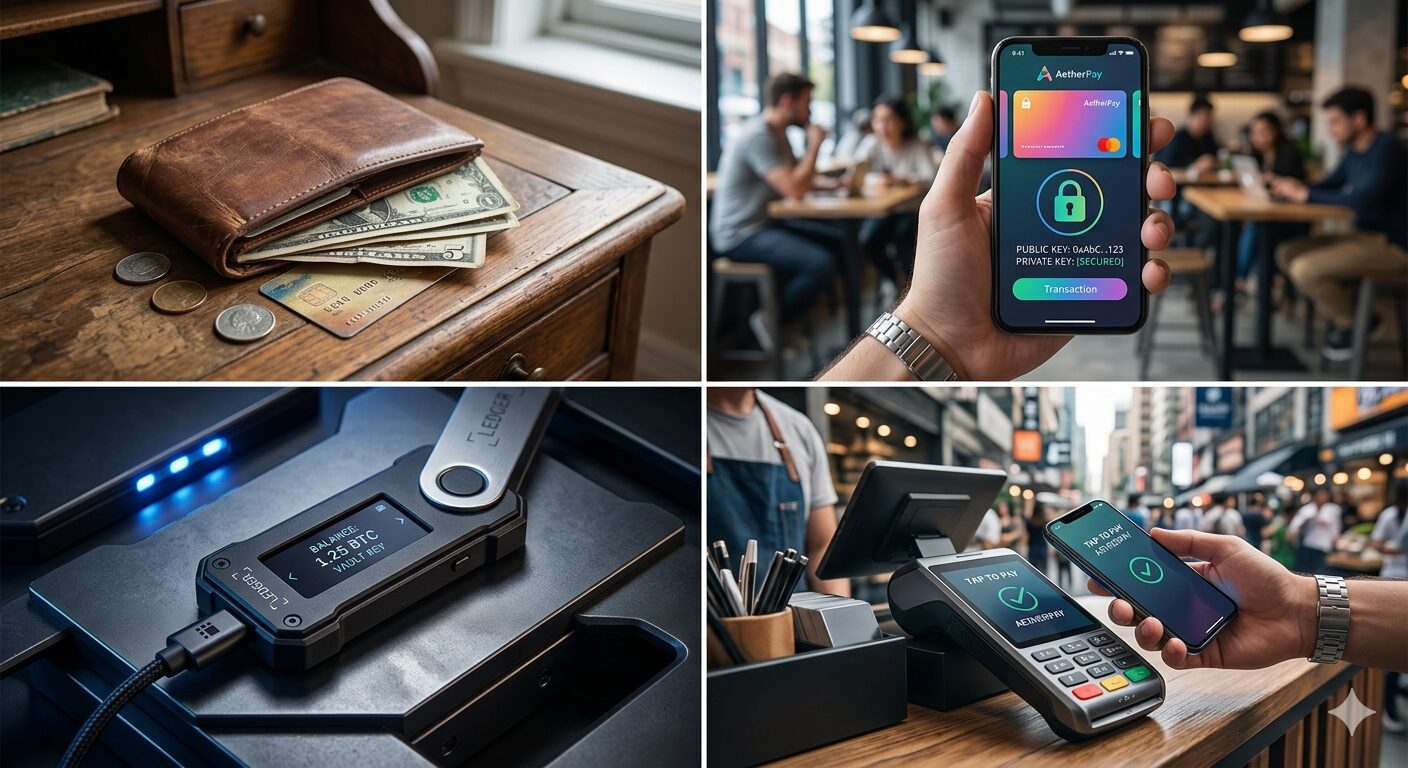
What is a wallet in the digital age? Whether you are curious about traditional leather bifolds or the complex world of crypto and mobile payments, this guide covers it all. We dive deep into how digital wallets work, the critical differences between hardware and software storage, and the top security features you need to protect your assets.
Discover the evolution of the wallet from a simple pocket accessory to a powerful financial tool. Learn how to choose the right wallet for your lifestyle and secure your digital future today.
What Is a Wallet? Defining the Essential Tool for Your Assets
At its most fundamental level, a wallet is a tool used to store, protect, and manage assets of value. However, the modern definition of “What is wallet” depends entirely on the medium of exchange you are using. In the realm of traditional finance, it is a container for physical cash and plastic cards. In the digital and blockchain sectors, it is a software interface or a specialized hardware device that interacts with a ledger to prove ownership of your funds.
The Evolution: From Leather Bifolds to Digital Encryption
Humanity has been carrying “wallets” since the dawn of currency. Ancient Greeks used “knapsacks” to carry basic provisions and coins. By the 1950s, the introduction of the credit card revolutionized the design of the bifold. Today, we are witnessing the final stage of this metamorphosis: the transition from atoms to bits.
The modern digital wallet is essentially a software container. It doesn’t actually “hold” your money in the way a leather wallet holds a twenty-dollar bill. Instead, it holds the encrypted data and digital signatures required to authorize a transaction.
How a Modern Wallet Functions (Public vs. Private Keys)
To truly grasp what is wallet in the context of modern fintech and cryptocurrency storage, you must understand the “Key” system. Think of your wallet as a high-security mailbox.
-
The Public Key: This is like your email address or your IBAN. You share this with the world so people can send you funds.
-
The Private Key: This is your secret password, your digital thumbprint, and your legal signature combined into one. If you lose your private key, you lose access to your assets forever.
The wallet’s primary job is to manage these keys securely, ensuring that while the world can see where to send money, only you have the power to move it.
The Different Types of Wallets: Finding Your Perfect Match
Not all wallets are created equal. The choice between convenience and security is a spectrum, and where you land depends on your daily habits and the value of the assets you are protecting. Understanding hardware vs software wallets is the first step in building a robust financial defense.
Software Wallets: Convenience in Your Pocket
Often referred to as “Hot Wallets,” these are applications that run on your smartphone or desktop. Because they are connected to the internet, they offer unparalleled convenience for digital payment security and frequent trading.
-
Examples: MetaMask, Trust Wallet, Exodus, and mobile banking apps.
-
Pros: Instant access, user-friendly interfaces, and often free to download.
-
Cons: Higher vulnerability to malware and phishing attacks compared to offline options.
Hardware Wallets: The Gold Standard for Security
If software wallets are your daily “spending money” pocket, hardware wallets are your “underground vault.” These are physical devices—often resembling a USB drive—that keep your private keys completely offline. This is known as cold storage.
By keeping the keys away from an internet connection, you eliminate the risk of remote hacking. For anyone serious about long-term cryptocurrency storage, a hardware wallet is not an expense; it is an insurance policy.
Paper Wallets: The Old-School Physical Backup
A paper wallet is exactly what it sounds like: a physical printout of your public and private keys, often in the form of QR codes. While they are 100% offline, they are fragile. A house fire or a spilled cup of coffee can destroy your entire net worth if you haven’t made copies. In 2026, these are largely being replaced by “Seed Plates”—stainless steel cards that can withstand extreme temperatures.
Comparison of Wallet Categories
| Feature | Software (Hot) Wallet | Hardware (Cold) Wallet | Paper Wallet |
| Connection | Always Online | Mostly Offline | 100% Offline |
| Security Level | Moderate | Very High | High (but physically fragile) |
| Best For | Daily Transactions | Long-term Savings | Niche Backups |
| Cost | Usually Free | $50 – $250+ | Price of Paper/Ink |
Digital vs. Crypto Wallets: Understanding the Distinctions
A common point of confusion for those asking “What is wallet” is the overlap between e-wallet features and blockchain-based storage. While they live on the same devices, their underlying “engines” are vastly different.
Mobile Wallets (Apple Pay, Google Pay, PayPal)
These are “proxies” for traditional money. When you use a mobile wallet, you aren’t actually using a new form of currency; you are using a digital version of your Visa or Mastercard.
-
Mechanism: They use Tokenization to protect your card details, replacing your actual card number with a “token” during a transaction.
-
Key Benefit: Speed and the ability to leave your physical cards at home.
Blockchain Wallets (Web3 & Assets)
Unlike Apple Pay, a blockchain wallet interacts directly with a decentralized network. It doesn’t need a bank to “approve” the transaction.
-
Self-Custody: You are your own bank. There is no “Forgot Password” button here.
-
Asset Variety: These wallets can hold not just currency, but also NFTs (Non-Fungible Tokens), digital identity documents, and smart contracts.
Proverb: “Not your keys, not your coins.” This is the golden rule of the digital age. If you don’t hold the private keys to your wallet, you are merely a guest in someone else’s financial house.
Key Features to Look for in a Secure Wallet
When you are scanning the market for a new tool, don’t be blinded by flashy graphics. High-level digital payment security is built on a foundation of specific technical features. If you are asking “What is wallet” security, you should be looking for these “must-haves”:
Multi-Factor Authentication (MFA) and Biometrics
In an era of sophisticated social engineering, a password is a flimsy shield. The best wallets utilize:
-
Biometric Locks: Fingerprint or Face ID to prevent local access.
-
2FA: Integration with apps like Google Authenticator (avoid SMS-based 2FA, as it is prone to SIM-swapping).
-
Multi-Sig: “Multi-signature” requirements, where two or more devices must approve a transaction before it is sent.
User Interface (UI) and Cross-Platform Support
A wallet is useless if it’s too complicated to use. The e-wallet features that matter most to the average user include:
-
Seamless Syncing: The ability to see your balance on both your phone and your laptop.
-
Intuitive Dashboards: Clear views of your transaction history and current asset valuation.
-
Fiat On-Ramps: The ability to buy crypto directly with a credit card within the app.
Conclusion: Taking Control of Your Financial Identity
So, what is wallet technology in the year 2026? It is the most powerful tool ever placed in the hands of the individual. It is the end of the “middleman” era and the beginning of personal financial sovereignty. By mastering the nuances of digital payment security and choosing the right hardware vs software wallets, you are doing more than just storing money—you are securing your freedom.

Hi! I’m Emma
Welcome to Best Consumer Guides! I research and compare everyday products to help readers make informed buying decisions. My guides focus on practical features, usability, value, and reliable product information. My goal is to make product research simpler and help you find the right products for your needs.